
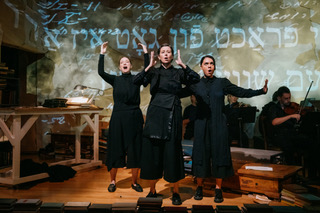
 On April 4–5, 2027, Case Western Reserve University will host a two-day public event exploring the history of Yiddish language and Jewish print culture through opera, hands-on activities, and scholarly exchange. The event makes a central argument: that language is itself a technology — a structured system for encoding and transmitting meaning, as vulnerable to obsolescence and as dependent on deliberate preservation as any other tool or machine.
The centerpiece is the Cleveland premiere of The Great Dictionary of the Yiddish Language, a chamber opera performed in Yiddish and English at Harkness Chapel, with composer Alex Weiser and librettist Ben Kaplan in attendance and CWRU student musicians performing alongside a professional cast. The opera dramatizes the post-Holocaust effort to compile a comprehensive Yiddish dictionary, staging Yiddish letters as characters who compel their human custodians to keep the language alive. Equally central is a scholarly symposium with experts in archival preservation, book history, and translation, where students draw on a semester of coursework to serve as informed facilitators rather than passive participants. A community letterpress workshop at the New Gutenberg Annex invites participants to set type by hand using CWRU’s rare Hebrew and Roman typefaces, led by student letterpress interns.
Students are central at every level — as performers, workshop leaders, and symposium facilitators. The Spring 2027 course “Lost and Found in Translation” is designed in direct dialogue with the event, moving students from classroom preparation into meaningful public roles and embodying the principle that active participation in cultural expression is itself a form of preservation.
Questions? Please contact Professor Barbara Mann for more information.